


Symmetrical lupoid onychodystrophy affects all claws on all four limbs within a few weeks, turning the focal detachment of a single claw into a painful generalized condition. Primarily described in the Gordon Setter with a prevalence reaching 12.6% and in the Bearded Collie where it is on the rise, it remains the most common immune-mediated nail disorder in dogs. This review details recent data, from the genetic substrate to current therapeutic strategies.
1. Definition, Terminology, and Epidemiology
1.1 Epidemiological Data
The condition remains rare in the general canine population, but is concentrated in a few breeds with high prevalence rates. A survey conducted among 104 Norwegian owners of Gordon and English Setters estimated the prevalence at 12.6% in these breeds (Gershony 2019b). In the Giant Schnauzer, a prevalence close to 10% has been reported. In the Bearded Collie, health records indicate a frequency of 3.6% out of 3,072 dogs registered, with an upward trend across successive surveys. This inter-breed gradient, which contrasts with the rarity of the disease in mixed-breed dogs, strongly points toward a genetic determinism of susceptibility.
The age of onset ranges from approximately two to seven years, with a mean close to 4.5 years (Wilbe 2010). In a cohort of Bearded Collies subjected to genomic sequencing, age at diagnosis ranged from 20 months to 7 years, confirming this young-to-mature adult profile (Gershony 2021). No clear sex predisposition has emerged from published series: in the cohort of 28 affected Bearded Collies, the distribution between males and females did not differ from that of controls (Steimer 2019). Breed distribution, however, is consistent across studies and constitutes the most robust epidemiological marker. The familial character of the disease, with marked differences in incidence between bloodlines and an increased risk in relatives of affected dogs, argues for substantial heritability, even though the mode of transmission has never been formally established (Wilbe 2010). The breed spectrum has broadened over successive publications: in addition to historically described breeds, the condition has been reported in the Labrador, Welsh Corgi, Boxer, and German Shorthaired Pointer, suggesting a susceptibility distributed across genetically distinct populations (Gershony 2019a).
1.2 Nosological Context and Classification Among Nail Diseases
Nail diseases are classically divided into traumatic, infectious, neoplastic, metabolic, and immune-mediated conditions. Within this framework, symmetrical lupoid onychodystrophy occupies a singular position: it is the most common immune-mediated disorder of the canine nail complex, and the only one whose involvement is limited to the claws without any associated cutaneous or systemic signs (Wilbe 2010). This anatomical restriction sets it apart from generalized autoimmune dermatoses, such as pemphigus foliaceus or systemic lupus erythematosus, in which nail involvement is just one feature among many.
The understanding of the disease has evolved since its initial description. The retrospective study of 18 cases observed between 1989 and 1993 established the histopathological picture, characterized by hydropic and lichenoid interface dermatitis, and coined the name based on its resemblance to lupus (Scott 1995). The syndrome was initially perceived as a standalone descriptive entity. Subsequent work reconsidered it as a common reactive pattern of the nail, potentially triggered by atopic dermatitis, adverse food reactions, autoimmune dermatosis, or, more rarely, a drug reaction (Steimer 2019). From 1995 to 2026, the disease thus evolved from the status of an isolated syndrome to that of a multifactorial disorder, in which a genetic susceptibility linked to the major histocompatibility complex meets environmental and immunological factors. This perspective explains the heterogeneity of therapeutic responses and the difficulty in proposing a single standardized protocol.
2. Pathophysiology and Genetic Basis
2.1 Immunological Mechanisms Involved
The autoimmune hypothesis rests on a body of converging evidence. Histologically, affected claws display a band-like mononuclear cell infiltrate arranged parallel to the basement membrane, hydropic degeneration and apoptosis of basal keratinocytes of the epidermis, and pigmentary incontinence in the dermis (Wilbe 2010). This lichenoid interface pattern is the hallmark lesion of the disease and underpins the lupoid qualifier. The interface reaction reflects a lymphocyte-mediated attack on basal cells, a mechanism shared with several autoimmune dermatoses of the dermo-epidermal junction.
The strongest experimental argument comes from the genetics of the major histocompatibility complex. In dogs, this complex is called the DLA and comprises three highly polymorphic class II genes — DLA-DRB1, DLA-DQA1, and DLA-DQB1 — whose exon 2 encodes the antigen-binding domain (Wilbe 2010). The association of particular DLA class II haplotypes with the disease supports an aberrant antigen presentation leading to a breakdown in tolerance, a well-established mechanism in human autoimmune conditions linked to the HLA system. The human nail apparatus, like the hair follicle, constitutes an immune privilege site characterized by low or absent expression of certain major histocompatibility complex antigens; disruption of this privilege could contribute to the initiation of the nail interface reaction. The therapeutic argument completes the picture: the response to glucocorticoids and immunomodulators supports the immune nature of the process.
Adaptive immunity is at the forefront of the retained pathophysiological model. Major histocompatibility complex class II molecules participate in thymic selection of T lymphocytes by eliminating autoreactive clones; certain haplotypes may contribute to autoimmunity by failing to suppress these clones, which then escape central tolerance (Gershony 2021). Amino acid substitutions could alter the repertoire of presented peptides and favor the presentation of as-yet-unidentified nail autoantigens (Wilbe 2010). The nail interface reaction would thus reflect a lymphocytic attack targeting basal keratinocytes of the matrix and nail bed, mediated by T cells activated upon contact with DLA class II molecules. This interpretation brings the disease closer to human lichenoid conditions, in which a lymphocytic interface infiltrate destroys the epithelial basal layer. The pigmentary incontinence observed in the superficial dermis is a consequence of this basal destruction, with released melanosomes being phagocytized by dermal macrophages.
2.2 Genetic Determinism
Sequencing of exon 2 of the three DLA class II genes in 98 affected Gordon Setters and 98 controls identified a risk haplotype present in 52.6% of cases versus 34.2% of controls (Wilbe 2010). Dogs homozygous for this haplotype had an elevated risk, with an odds ratio of 5.4 compared to dogs lacking the haplotype.
In the Bearded Collie, the largest published series, involving 236 dogs including 50 affected individuals, confirmed two closely related risk haplotypes (Gershony 2019a). Affected dogs were more often homozygous than controls.
2.3 Triggering Factors and Suspected Comorbidities
Several conditions have been proposed as triggers or modulators, without a causal relationship always being established. Atopic dermatitis, adverse food reactions, pemphigus foliaceus, lupus erythematosus, and vasculitis are among the documented causes of lupoid onychomadesis, reinforcing the concept of a common reactive pattern (Steimer 2019). Autoimmune hypothyroidism has been suggested as a comorbidity, but no study has demonstrated a robust association: epidemiological coincidence remains the most cautious interpretation in the absence of conclusive quantitative data. In the Bearded Collie, 11.2% of registered dogs had at least one autoimmune disease, placing the condition within a broader breed-level autoimmune background (Gershony 2019a).
Food allergy holds a particular place as a modulating factor. In the Bearded Collie cohort, two dogs responded favorably to an elimination diet, one without additional treatment and the other with concurrent fatty acid supplementation; as owners refused rechallenge, the diagnosis of adverse food reaction could not be confirmed, and the claws did not return to fully normal (Steimer 2019). The randomized trial comparing cyclosporine to fish oil in Setters, all fed for six months on a diet rich in fatty acids, showed no significant difference between groups, leading to the suggestion that dietary management itself, rather than the tested molecule, may have accounted for the improvement (Hunter 2020). The vaccine hypothesis, long suspected, has not been confirmed: in the Munich series, only one dog developed onychomadesis within a month of vaccination, with no clear temporal correlation across the entire group. Secondary bacterial or Malassezia infections sustain and aggravate the inflammatory process of the nail bed, justifying their systematic management, without constituting the primary cause.
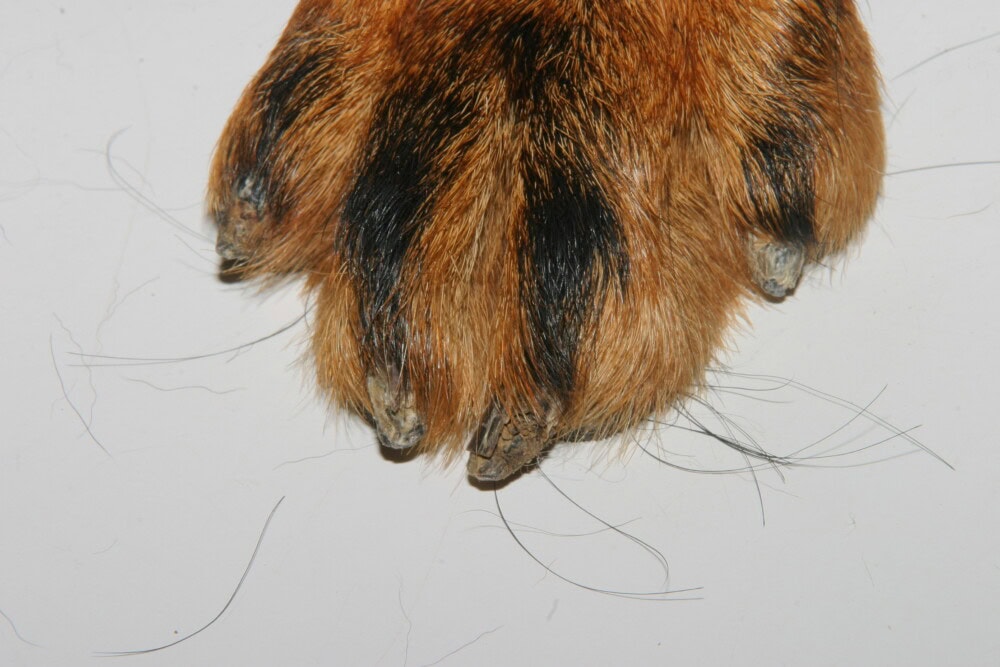
Involvement of multiple digits on the same paw is common
3. Clinical Presentation and Differential Diagnosis
3.1 Signs and Natural Course
The initial phase is marked by detachment of one or a few claws, accompanied by onychodalgia and lameness, sometimes preceded by periungual bleeding (Wilbe 2010). This deceptively focal presentation frequently leads to a misdiagnosis of trauma in general practice. Pain, repeated licking, and reluctance to bear weight are warning signs that should prompt examination of all claws on all four limbs, as involvement of a single claw is rarely isolated in the long run.
The extension phase occurs over a few weeks to two or three months, during which onychomadesis progressively affects all claws on all four paws. The symmetry of the involvement, which gives the condition its name, then becomes apparent. The claws detach one after another, exposing a painful, exudative nail bed prone to secondary infections. Regrowth defines the chronic phase: new claws are short, dry, brittle, and deformed, reflecting permanent onychodystrophy (Steimer 2019). Under treatment, many dogs stop losing their claws, but they remain scaly, short, and soft. Quality of life is affected to varying degrees; in the Bearded Collie cohort, the impairment was mild in 11 cases, moderate in 5, and severe in 2. Residual fragility predisposes to localized recurrences and chronic discomfort that condition long-term management.
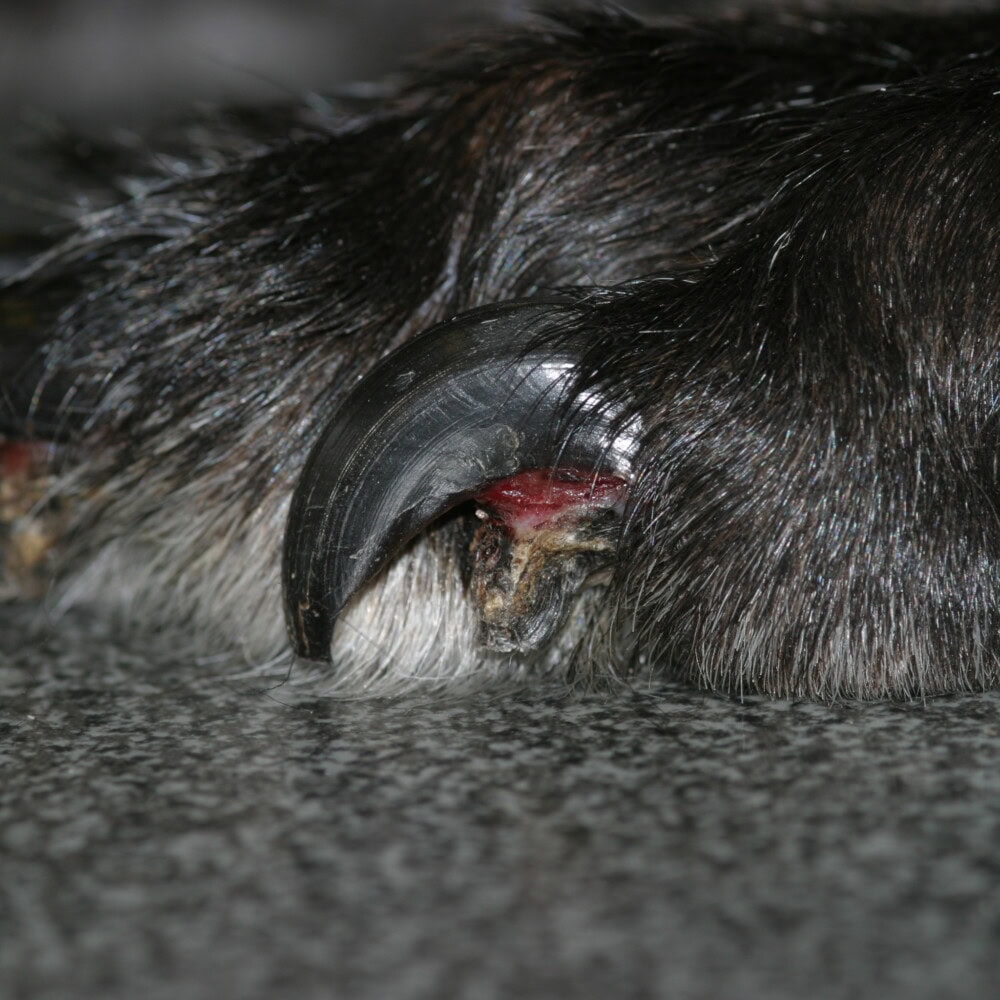
The horny sheath in the process of separating from the quick
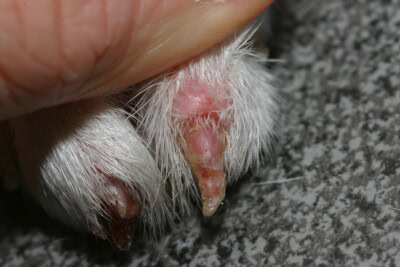
After the claw has fallen off, pain gradually subsides
3.2 Practical Differential Diagnosis
Isolated fungal and bacterial infections of the nail complex constitute the primary differential diagnosis. They typically affect one or a few claws, without the characteristic symmetry or generalization, and cytology along with culture rapidly point in the right direction. Nail dermatophytosis, which is rare, or focal bacterial paronychia do not reproduce the simultaneous involvement of all four limbs. The distinction rests on the topographic pattern, the uni- or multifocal character, and the direct identification of infectious agents.
Systemic diseases with nail involvement form the second group. Systemic lupus erythematosus, pemphigus foliaceus, and vasculitis can cause onychomadesis, but are almost always accompanied by cutaneous, mucosal, or systemic signs that are absent in the claw-limited form (Steimer 2019). The presence of depigmentation of the lips and eyelids, observed in one of the Bearded Collies in the Munich series, should prompt consideration of lupus or vitiligo and lead to biopsy of the depigmented skin. Common diagnostic pitfalls include the initial focal phase, confused with trauma, and the fluctuating chronicity that can simulate spontaneous improvement. Signals warranting specialist referral include symmetric and progressive involvement of multiple claws, failure to respond to local care, persistent pain, and any extra-ungual sign that might broaden the picture toward a generalized autoimmune dermatosis.
3.3 Structured Diagnostic Approach
Nail bed cytology and direct examination are the essential first-line investigation, aimed at identifying and treating bacterial or Malassezia secondary infections before drawing any etiological conclusions (van Amersfort 2023). This simple examination, performable in the consultation room, avoids attributing to the underlying disease signs that are maintained by secondary colonization. It guides antiseptic care and local antibiotic therapy, and conditions the interpretation of subsequent steps.
A minimal laboratory workup aims to rule out systemic disease and screen for comorbidities. Thyroid evaluation is warranted in the presence of any suggestive clinical signs, even though the association between hypothyroidism and nail disease remains unproven. Biopsy and histopathological examination provide diagnostic confirmation by revealing hydropic and lichenoid interface dermatitis, apoptosis of basal keratinocytes, and pigmentary incontinence (Wilbe 2010). Two sampling methods are available. Third phalanx amputation, long considered the gold standard, provides a high-quality sample including the matrix but permanently sacrifices a claw; matrix biopsy without onychectomy, less destructive, has been performed in several series (Hunter 2020). Diagnosis is often made on the basis of history, characteristic clinical signs, and exclusion of other causes, with histological confirmation reserved for atypical or refractory cases: in the foundational retrospective study, only two of five dogs in one series had histopathological confirmation, illustrating the pragmatic role of biopsy (Hunter 2020). In a research context, nail bed biopsy and gene expression profiling have been proposed to identify the genes actually involved, but their invasiveness limits clinical use (Gershony 2021). In practice, the clinician prioritizes investigations according to severity and atypicality: systematic cytology as the first step, laboratory workup in the presence of any extra-ungual sign, and biopsy as a last resort when the diagnosis remains uncertain or treatment fails. Third phalanx amputation is preferably reserved for a claw already compromised, to avoid sacrificing a functional one, and submission of the fixed sample to a laboratory familiar with nail dermatoses improves the relevance of histological interpretation.
4. Therapeutic Strategies
4.1 Initial Management and Symptomatic Measures
Pain dominates the acute phase and necessitates analgesia. Reducing mechanical trauma involves regular trimming and grinding of the claws to minimize stress; in one Pointer crossbreed, mechanical management alone allowed durable control of the condition after the first year, with no subsequent onychomadesis or pain (Hunter 2020). This conservative measure, sometimes sufficient in mild forms, always accompanies medical treatments.
Treatment of secondary infections constitutes the second pillar. Thorough local antiseptic care of the exposed nail bed and, when cytology warrants it, targeted antibiotic therapy limit the perpetuation of inflammation (van Amersfort 2023). The imperative of responsible antibiotic use calls for reserving systemic antibacterials for documented secondary infections and prioritizing local care. Total nail avulsion under general anesthesia has been proposed in the most painful and refractory cases: it immediately eliminates the source of pain by removing all detached claws, but is a major procedure whose aftermath requires sustained analgesia and prolonged healing. This option remains exceptional and is only considered after failure of medical and conservative approaches.
4.2 First- and Second-Line Immunomodulatory Treatments
The tetracycline-niacinamide combination represents a recognized first-line option, based on the immunomodulatory properties of these molecules. Tetracycline and nicotinamide were administered at 500 mg of each molecule three times daily in dogs over 22 lbs, with good or partial responses in several cases, with a delay of action extending over several weeks (Hunter 2020). An evidence-based review identified 35 dogs treated with niacinamide and antibiotic therapy for at least seven weeks, with partial to excellent improvement in 12 of them (van Amersfort 2023). The comparative synthesis of available series does not identify any clearly superior class: tetracycline-niacinamide, doxycycline-niacinamide, and pentoxifylline as monotherapy have each produced responses ranging from excellent to poor, with no demonstrated difference in efficacy between tetracycline and doxycycline (Hunter 2020). Doxycycline, better tolerated and simpler to administer than tetracycline, has largely replaced it; a four-month course combining fatty acids, doxycycline, and niacinamide was followed by complete remission maintained after discontinuation in one Bearded Collie (Steimer 2019). The imperative of responsible antibiotic use in 2026 calls for periodic reassessment of their justification; the risk of emergence of multidrug-resistant bacteria has indeed led to recommending the replacement of long-term tetracycline and doxycycline with pentoxifylline, considered to have comparable efficacy.
Cyclosporine is among the second-line options. An unblinded randomized trial compared cyclosporine at 5 mg/kg once daily to fish oil supplementation in 12 Gordon Setters and one English Setter, all fed for six months on a diet rich in fatty acids, with no significant difference between groups (Hunter 2020). Cyclosporine can be used alone or combined with fatty acids, its benefit lying in steroid-sparing. Systemic corticosteroid therapy retains recognized efficacy in severe forms. The adverse effects of long-term glucocorticoids and azathioprine, used at 2.2 mg/kg per day, restrict these molecules to refractory cases: in the Munich series, one dog initially improved on azathioprine and prednisolone relapsed and was subsequently euthanized due to persistent pain and lameness.
4.3 Adjuvant Treatments and Long-Term Management
Omega-3 fatty acid supplementation holds a central place among adjuvants. Preparations used combine eicosapentaenoic acid and docosahexaenoic acid (Hunter 2020). Nine dogs supplemented with omega-3 and omega-6 fatty acids at one capsule per 20 lbs per day showed good to excellent responses, with improvement in three to four months and maximum benefit within twelve months, two of them relapsing upon discontinuation and then responding upon reintroduction (Scott 1995). At least partial response to fatty acids was recorded in six of seven studies that evaluated them, justifying their use as an adjuvant or maintenance treatment despite the absence of evidence for universal efficacy.
Pentoxifylline features in the most commonly used combinations, the trio of fatty acids, pentoxifylline, and tetracycline being the most frequent in the Bearded Collie cohort (Steimer 2019). Like tetracycline, it inhibits the expression of matrix metalloproteinases, and the nail lesional process shares similarities with laminitis in ungulates, in which transcription of a membrane metalloproteinase is involved, which may justify its use as an alternative to antibiotics. The doses used in published series, however, were neither standardized nor systematically reported, so no reference dosage can be cited from the literature specific to this condition (Hunter 2020). Vitamin E, administered at 400 mg twice daily, accompanied corticosteroid protocols with a response rated good to excellent in a small series (Scott 1995). Biotin and zinc, on the other hand, brought no improvement in the cases where they were tried, and the combination of B-vitamins and zinc remained without effect after five months in one dog (van Amersfort 2023). The overall evidence in favor of nutraceuticals remains limited, as these products may improve signs or reduce the dose of concomitant medication through a steroid-sparing effect without constituting a disease-modifying treatment. Therapeutic maintenance rests on dosage adjustment guided by clinical response: reduction in the use of doxycycline and niacinamide, continuation of fatty acids, and regular monitoring of claw condition and pain. The largest published retrospective therapeutic series, involving 30 dogs of various breeds and sizes, confirmed this logic of individualized combinations without a single standardized protocol (Hunter 2020).
5. Prognosis, Follow-Up, and Perspectives
5.1 Assessment of Therapeutic Response
Objective criteria for response are based on restored anchorage of the horny sheath, absence of periungual inflammation, and resolution of pain. An excellent response corresponds to regrowth of normal claws; a good response to resolution of onycholysis, onychomadesis, and pain despite persistence of abnormal morphology; partial response combines residual onychodystrophy with infrequent episodes of detachment; and failure reflects an absence of improvement. This grading system, used in published series, structures clinical evaluation.
The kinetics of nail regrowth impose appropriate evaluation timeframes. The slow growth of the canine claw explains why benefit is only appreciable after several months, with improvement typically occurring in three to four months and maximum benefit within twelve months (Scott 1995). A premature assessment of treatment efficacy judged over a few weeks would erroneously conclude failure. In the Bearded Collie cohort, 19 dogs stopped losing their claws even though they remained scaly, short, and soft, a state considered an acceptable clinical success even without complete morphological restoration (Steimer 2019). This nuance, essential for informing the owner, refocuses the goal on comfort and function rather than nail aesthetics.
5.2 Long-Term Prognosis and Factors Influencing Outcome
The prognosis is generally favorable for comfort but guarded regarding morphological cure. Of 25 treated Bearded Collies, improvement was achieved in 17, rated good in 13 and excellent in 4 (Steimer 2019). Relapses are frequent, underscoring the frequent need for prolonged maintenance treatment, sometimes lifelong. Discontinuation of treatment exposes the patient to relapse, with several dogs only regaining remission after reintroduction of supplementation (Scott 1995).
Early diagnosis influences the quality of regrowth and the animal’s comfort. Management initiated during the extension phase, before the establishment of severe chronic onychodystrophy, offers better chances of functional claws. Conversely, a longstanding, neglected condition leaves morphological sequelae that are difficult to correct. Available data do not allow a reliable differential prognosis to be established by breed: published series involve limited numbers, often of a single breed, and there is no demonstrated association between the type of molecule used and outcome. The Bearded Collie, Gordon Setter, and German Shepherd share a comparable clinical picture and therapeutic response, with no breed standing out as clearly having a worse prognosis based on current data. The absence of association between the choice of molecule and outcome suggests that the quality of overall management — combining control of secondary infections, mechanical care, and prolonged compliance — matters more than the choice of a particular immunomodulator. The genetic profile could eventually refine prognosis: dogs homozygous for two DLA risk haplotypes, who concentrate the greatest susceptibility, may present with earlier or more persistent disease (Gershony 2021).
Conclusion
Symmetrical lupoid onychodystrophy is now understood as an immune-mediated reactive nail pattern whose susceptibility rests on DLA class II haplotypes shared among predisposed breeds. Diagnosis combines recognition of symmetric and progressive onychomadesis, exclusion of infectious and systemic causes, and, in atypical cases, histological confirmation of lichenoid interface dermatitis. Management, which is multimodal and prolonged, targets comfort and function rather than morphological restoration, with the doxycycline-niacinamide combination and fatty acid supplementation forming the first-line pillars, and immunosuppressants reserved for refractory cases. Frequent relapses necessitate long-term follow-up.
References
Van Amersfort K, van der Lee A, Hagen-Plantinga E. Evidence-base for the beneficial effect of nutraceuticals in canine dermatological immune-mediated inflammatory diseases — a literature review. Vet Dermatol. 2023;34(4):266-283.
Bauer A, De Lucia M, Leuthard F, Jagannathan V, Leeb T. Compound heterozygosity for TNXB genetic variants in a mixed-breed dog with Ehlers-Danlos syndrome. Anim Genet. 2019;50(5):546-549.
Gershony LC, Belanger JM, Short AD, Le M, Hytönen MK, Lohi H, Famula TR, Kennedy LJ, Oberbauer AM. DLA class II risk haplotypes for autoimmune diseases in the bearded collie offer insight to autoimmunity signatures across dog breeds. Canine Genet Epidemiol. 2019a;6:2.
Gershony LC, Belanger JM, Hytönen MK, Lohi H, Oberbauer AM. Novel locus associated with symmetrical lupoid onychodystrophy in the bearded collie. Genes (Basel). 2019b;10(9):635.
Gershony LC, Belanger JM, Hytönen MK, Lohi H, Oberbauer AM. Whole genome sequencing reveals multiple linked genetic variants on canine chromosome 12 associated with risk for symmetrical lupoid onychodystrophy (SLO) in the bearded collie. Genes (Basel). 2021;12(8):1265.
Hunter E, Foster A, O’Dair H, Place E. Are oral essential fatty acids alone an effective treatment for symmetrical lupoid onychodystrophy/onychomadesis? Vet Rec. 2020;186(14):452-454.
Scott DW, Rousselle S, Miller WH. Symmetrical lupoid onychodystrophy in dogs: a retrospective analysis of 18 cases (1989-1993). J Am Anim Hosp Assoc. 1995;31(3):194-201.
Steimer T, Bauer A, Kienzle E, Mueller RS. Canine symmetrical lupoid onychomadesis in bearded collies. Vet Dermatol. 2019;30(5):411-e124.
Wilbe M, et al. DLA class II alleles are associated with risk for canine symmetrical lupoid onychodystrophy (SLO). PLoS One. 2010;5(8):e12332.